


At the opening of the 101st CRC session (1 September 2026), Child Rights Connect delivered a statement on behalf of its network.
Distinguished members of the Committee, representatives of UN agencies and CSOs, colleagues and friends,
Child Rights Connect, as the largest global network of child rights NGOs, warmly welcomes the holding of this 101st session of the Committee on the Rights of the Child. In the context of the ongoing UN liquidity crisis, we particularly appreciate the efforts of the Committee and its Secretariat to secure a five-week session, including the pre-session, following an unprecedented level of cancelled meetings, including one session and two pre-sessions.
Maintaining this session is critical at a time when the Committee’s work remains essential to advancing the implementation of the Convention and addressing the many challenges facing children around the world. As we have highlighted in previous sessions, the cancellation and late confirmation of meetings over the past two years have significantly reduced opportunities for meaningful engagement for civil society and children, affecting their ability to prepare submissions and participate in-person. We welcome the analysis in the OHCHR paper Exceptional working methods and NGO/civil society participation in treaty body sessions, which confirms our observations and recommends to “identify appropriate approaches to safeguarding meaningful NGO and civil society participation under current and future operational constraints”. We hope this analysis can inform discussions on possible solutions.
As part of TB-Net(the network of NGOs supporting each treaty body of which Child Rights Connect is part of), Child Rights Connect is actively engaged in discussions with OHCHR and treaty bodies Chairs on strengthening the effectiveness, efficiency and sustainability of the UN treaty body system as a whole for the benefit of this Committee and meaningful civil society participation despite the current resource constraints. In this context, we would like to draw the attention of the Committee to the recommendation of TB-Net to all treaty bodies to make available a year-round indicative schedule of State reviews. Such a year-round schedule, even as tentative and subject to change, will provide greater predictability for civil society and children and help their participation, which is critical to the effectiveness of reporting procedure. Child Rights Connect remains committed to actively engaging with and supporting discussions with the Committee, the Secretariat, OHCHR, UNICEF and our partners, bringing forward practical ideas and solutions to help preserve meaningful opportunities for civil society participation throughout this period of uncertainty.
In addition, we warmly welcome the transition to the OHCHR Events Platform for the submission of reports by civil society. For many years, Child Rights Connect has hosted a safe platform on our website for NGOs, NHRIs and children to submit reports through an efficient and coordinated process. With the establishment of the OHCHR platform, we believe that moving submissions directly into the OHCHR system is an important step towards a more coherent and streamlined reporting process across the treaty bodies. We are pleased to support this transition and to see the work built up through our platform continue within the wider UN system.
We also welcome the theme of the upcoming UNICEF biennial meeting with the Committee, focusing on children’s civil and political rights under Articles 13 to 17 of the Convention. We have observed that these rights remain relatively underreported by civil society and are not systematically addressed in the Committee’s recommendations. We therefore see an important opportunity for the meeting to strengthen guidance and attention to these rights, supporting more comprehensive reporting and, ultimately, their better protection and fulfilment at national level.
Strengthening global and national policy frameworks for children’s civil and political rights is also a key objective of Child Rights Connect’s 2025–2029 Strategic Plan. Finally, I would like to highlight three areas where our network is actively contributing to advancing these rights, among others:
- Strengthening Protection in Armed Conflict: With the number of active armed conflicts reaching historic levels, our network has intensified its international advocacy on the rights of children in armed conflict. We supported a dedicated consultation between children from conflict-affected contexts and the European Union, penholder for the HRC biennial resolution on the rights of the child. Their recommendations helped shape the resolution, which was adopted by consensus and includes strong measures on accountability and calls for child participation throughout the conflict cycle. This outcome underscores the vital importance of meaningful child participation in shaping international standards during times of crisis. We encourage the Committee to draw on the State’s commitments in the resolution in its review of States and General Comment 27. On the child rights mainstreaming agenda, the resolution send a reminder of the importance of ensuring the systematic and effective application of the SG Guidance Note, in particular in ongoing UN reforms.
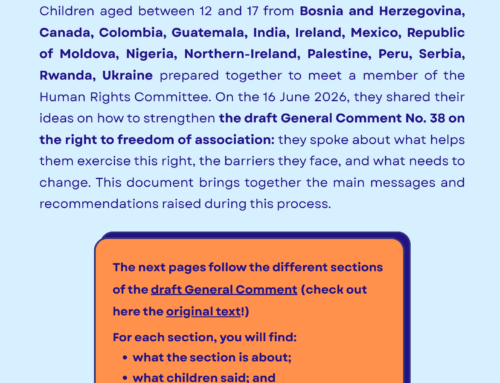
- Advancing Guidance on Freedom of Association: we have partnered with Amnesty International to ensure children’s voices shape the UN Human Rights Committee’s new General Comment 38 on the right to freedom of association. For the first time, child human rights defenders aged 12 to 17 met directly with a member of the Human Rights Committee to share their experiences. Their key message is clear: freedom of association is essential for children’s development and education. They highlighted barriers such as age discrimination, adult-centred approaches, and legal restrictions, particularly in schools. These insights have been translated into concrete drafting proposals to ensure the new guidance better protects children’s right to join and create associations.
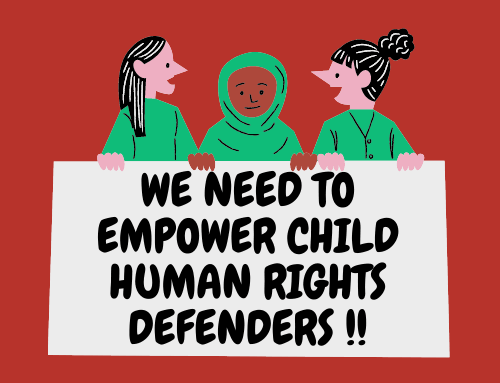
- Implementing the Strategic Vision for Child Human Rights Defenders (CHRDs): We continue to implement the Committee’s 2018 Day of General Discussion recommendations by advancing the Strategic Vision endorsed by the Committee. This includes launching the “Latin America Regional Dialogues,” which brought together 108 participants to map existing initiatives in support of child human rights defenders in the region. We are also working on Advisy, our new AI-powered chatbot designed to help child defenders access reliable information on their rights and digital protection. We invite the Committee to test this tool and provide feedback before its launch in November. Additionally, we have supported groups of CHRDs in Thailand, Togo, and Moldova to submit UPR reports, ensuring their voices reach the international community.
We look forward to engaging with the Committee throughout this five-week session, contributing to these critical discussions, and working together to ensure that children’s rights remain at the heart of the UN agenda, even amidst financial uncertainty.
child rights connect



Leave A Comment